PTEROCARPUS MARSUPIUM · THE INDIAN KINO TREE

Everything You Need to Know About the Herb, the Wood, and the Ritual

Vijaysar is the Ayurvedic name commonly used for Pterocarpus marsupium, a medicinal tree also known as Indian kino. The tree is also called Bijasar in Hindi, and classical Ayurvedic texts refer to it as Asana or Bijaka.

First, Vijaysar products may use heartwood, bark, gum, flowers, or extracts, but these materials are not interchangeable. For example, the familiar reddish-brown Vijaysar wood tumbler is usually made from heartwood, whereas capsules may contain powdered bark, wood, or a concentrated extract.

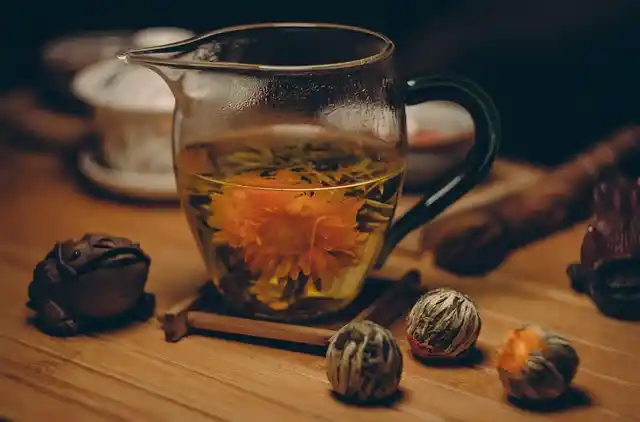
Traditional Vijaysar wooden cup with herbal drink

About The Herb

What is Vijaysar, Exactly?

Vijaysar is the heartwood of Pterocarpus marsupium — a tall, deciduous tree that grows wild across the forests of India, Nepal and Sri Lanka. You'll find it in the Western Ghats, the Karnataka-Kerala belt, and scattered through the hills of Madhya Pradesh, Gujarat, Uttar Pradesh and Bihar. It's not a hard tree to spot once you know what you're looking for: smoky-grey bark with vertical cracks running down it, yellow flowers, and a reddish sap (called "kino") that seeps out wherever the bark is cut.

People have been using this tree for a very long time. It shows up in the Charaka Samhita, the Sushruta Samhita, the Bhavaprakasha, the Ashtanga Hridaya — pretty much every major classical Ayurvedic text has something to say about it. And it's usually said in the same breath as one word: diabetes. Vijaysar has been called "the Ayurvedic tree for diabetes" for so long that in a lot of Indian households, that's just what it's known for.
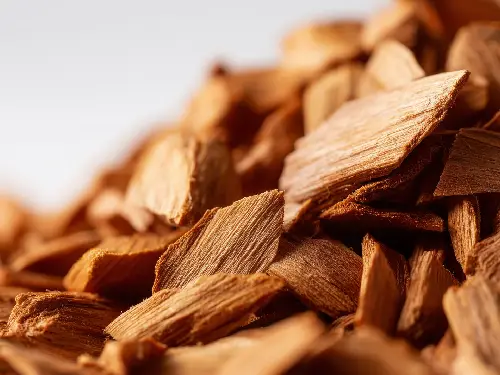
Vijaysar heartwood pieces used in traditional Ayurveda
Authentic Vijaysar heartwood
Read more
Ayurveda Remedy

How Ayurveda describes it

That bitter-astringent combination is really the whole story of why Vijaysar is used the way it is — for blood sugar, yes, but also for weight, skin, and digestion. Ayurveda doesn't really separate those the way modern medicine does; a herb that clears excess Kapha tends to show up across all of them.

Learn more about Vijaysar →
Rasa (Taste)
Tikta (Bitter), Kashaya (Astringent)
Guna (Quality)
Laghu (Light), Ruksha (Dry)
Virya (Potency)
Sheeta (Cooling)
Vipaka (Post-digestive effect)
Katu (Pungent)
Dosha effect
Pacifies Kapha and Pitta
Classification
A Rasayana (rejuvenative) herb, grouped under Salasaradi Gana by Sushruta and Asanadi Gana by Vagbhata
Application In Ayurveda

What's actually in the wood —
the modern research side

Here's the thing about a lot of Ayurvedic herbs: they get dismissed as "just folk medicine" until someone runs it through a lab, and then it turns out there's a real reason people have been using it for three thousand years. Vijaysar is a decent example of that.


Researchers have identified a handful of compounds in the heartwood that come up again and again:

01

Pterostilbene

— a polyphenol that's been studied specifically for its role in glucose metabolism

02

Marsupin and pterosupin

linked to protective effects on pancreatic beta cells

03

Epicatechin, liquiritigenin and isoliquiritigenin

flavonoids with antioxidant activity

04

Tannins and kinotannic acid

— the compounds behind its astringent taste and wound-healing use

One study worth mentioning: a 2022 paper in the journal Metabolites ran Vijaysar heartwood extract through GC-MS, UPLC-MS and HPTLC to map out its chemical profile, then tested it on liver cells. The extract improved glucose uptake in those cells and appeared to protect them from oxidative stress. It's not the final word on how Vijaysar works — no single study is — but it's a decent bridge between "this is what Ayurveda has always said" and "here's a plausible mechanism for why."

For Practitioners

What Vijaysar is used for

Ayurveda is not a one-size remedy. A short conversation with a Vaidya ensures Vijaysar reaches you in the form, dose and combination that best supports your constitution — and that it works safely alongside any medication you are already taking.

🧪

Blood sugar

This is the big one, the reason most people come looking for Vijaysar in the first place. Its bitter-astringent nature and Kapha-Pitta balancing action are the traditional explanation for why it's thought to support pancreatic function and glucose metabolism.

Weight and metabolism

Because it helps clear Kapha and Ama (what Ayurveda calls metabolic toxins), Vijaysar is also used by people trying to manage their weight — it's meant to work on the "why is my metabolism sluggish" problem rather than acting as a quick-fix stimulant.

Liver support

The same antioxidant activity that protects pancreatic cells is credited with protecting liver cells too. It's long been used as a general liver tonic in Ayurvedic practice.

🔬

Skin

Applied as a paste or taken internally, Vijaysar's antimicrobial and anti-inflammatory propertiescome up a lot in remedies for eczema, itching and other inflamed skin conditions.

🔬

Digestion

It's Deepana and Pachana in Ayurvedic terms — meaning it's thought to stoke digestive fire and ease things like bloating, indigestion and occasional loose motions.

🔬

Wound healing

A classical, fairly simple remedy: Vijaysar leaf juice mixed with honey, applied to minor wounds.

🔬

General immunity and vitality

Its antimicrobial properties are part of why it shows up in formulas meant to support the body's natural resistance and reduce general fatigue.

🔬

Long-term use as a Rasayana

This is worth calling out separately — Vijaysar isn't meant to be a herb you take for two weeks and stop. As a Rasayana, it's traditionally used consistently, over time, as a tonic rather than a treatment for one symptom

One herb Many forms The right choice is personal.

The Vijaysar wood tumbler — the part that makes this herb different

Most Ayurvedic herbs ask something of you. Boil this, measure that, remember to take it twice a day. Vijaysar has a version that asks almost nothing: you don't take the herb, you drink water that's simply spent the night near it.


Here's how it actually works. The same compounds we talked about earlier — pterostilbene, marsupin, tannins — are sitting right there in the wood. Leave water in a tumbler carved from that wood overnight, and those compounds slowly work their way into it. By morning, the water has turned a light amber-brown. That's not food colouring or anything artificial — it's just the wood doing what wood with tannins does when it sits in water long enough.

How to use Vijaysar glass, day to day:

Most Ayurvedic herbs ask something of you. Boil this, measure that, remember to take it twice a day. Vijaysar has a version that asks almost nothing: you don't take the herb, you drink water that's simply spent the night near it.


There's no measuring spoon, no capsule to remember, no taste to get used to. It's just a glass of water you'd be drinking anyway, made to do a bit more. That's probably the biggest reason people who try the tumbler tend to stick with it longer than they stick with powders — there's nothing to forget.

01 the tumbler with clean water before bed.

02 Leave it for 8–10 hours — overnight.

03 In the morning, the water should have a visible amber tint.

04 Drink it on an empty stomach, before breakfast.

05 Rinse and refill for the next night. That's it.

Ayurveda Solutions

If you want to try this yourself →

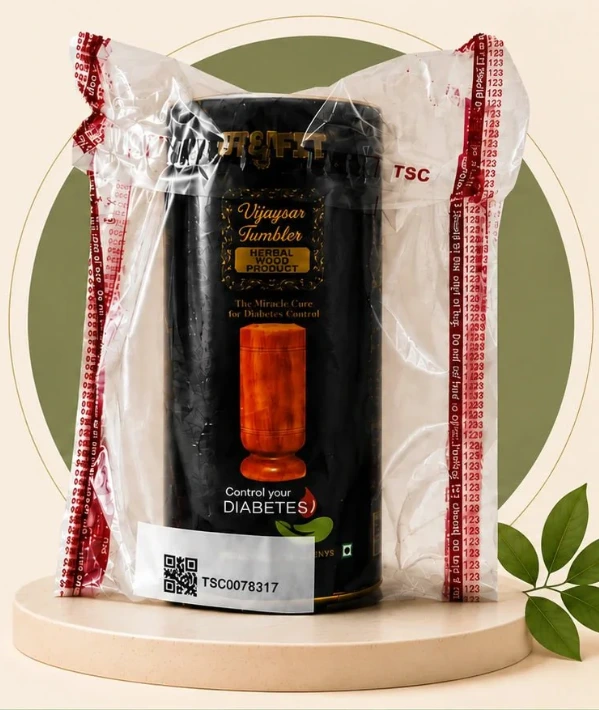
The MADHUFIT Vijaysar Herbal Tumbler is carved from genuine Pterocarpus marsupium heartwood — no dyes, no shortcuts. madhufit.in.

Vijaysar Heartwood Pure Heartwood Pieces & Powder

Vijaysar (Herb Blocks)

Single-herb Pterocarpus marsupium. Traditionally used as a daily decoction for blood sugar and Kapha-Meda balance.

View Product →
Vijaysar Capsule Standardised Heartwood Extract

Vijaysar Herbal Tumbler

Control your Sugar levels Naturally with Vijaysar wood sugar control glass

View Product →
Madhufit
About Madhufit

25 years of excellence in the field of Ayurveda.

Madhufit Clinic & Research Center, based in Jaipur, India, is a working Ayurvedic hospital, traditional pharmacy and international training institute. Patients from over sixty countries have consulted our Vaidyas for Panchakarma therapy, classical formulations and authentic Ayurvedic care — including remedies built around Vijaysar.

25+

Years of Practice

200+

Classical Formulations

60+

Countries Served
About the Clinic →

Why people choose the MADHUFIT tumbler

We keep this simple, because the ritual itself is simple. The tumbler is carved from genuine Pterocarpus marsupium heartwood — not a dyed substitute — sized so a full morning dose fits comfortably. No capsules, no powder to measure, nothing to add to your routine except a glass of water you were probably going to drink anyway. It's built around what Ayurveda has used for centuries, and what current research is slowly catching up to explaining.

Want to start? Scan the QR Shop the MADHUFIT Vijaysar Herbal Tumbler

Opera Mobile App
Questions people actually ask

Common questions, answered.

What is Vijaysar?

The heartwood of Pterocarpus marsupium, a tree native to India, Nepal and Sri Lanka — used in Ayurveda mainly to support healthy blood sugar, along with digestion and skin health.

What's a Vijaysar wood glass actually for?

It's for making Vijaysar-infused water. Leave water in it overnight, it turns amber by morning, and you drink it — that's the entire ritual.

How long does the wood last?

About 3 years of regular use. Once the water stops turning brown overnight, it's done its job.

Does it interact with diabetes medication?

It can add to the effect, so it's worth keeping an eye on your levels and mentioning it to your doctor, especially in the first few weeks.

Can I use it long-term?

Yes — it's a Rasayana herb, meant for consistent long-term use rather than a short course. Checking in with a practitioner now and then is still a good idea.

Is "Vijaysar" the same thing as "Vijaysar wood glass"?

Not quite. Vijaysar is the herb itself. A Vijaysar wood glass (or tumbler) is the vessel carved from that wood, used to prepare the infused water.

Ayurveda Pharmacy

Reading & education.

All Articles.